
Actionable steps towards identity-affirming school mental health
Dismantle
By dismantling, we refer to taking apart what no longer serves students and making space for what does.
Dismantling inequities in education begins with understanding the conditions that created them. Schools are places where students should feel safe, supported, and able to learn. However, the education system, like all systems in society, can unintentionally reinforce inequities when certain structures, practices, or traditions benefit some students more than others.
These inequities did not emerge by accident. They are the result of oppressive histories around the world and Canada that were based on the harmful belief that white European values, knowledges and cultures were superior. These false beliefs shaped many of the systems still in place today, including education, and they continue to influence school environments in both subtle and obvious ways.
Dismantling inequities requires us to:
- recognize this history and its disproportionate impacts
- understand how it continues to show up in our current structures
- take intentional steps to remove barriers
…so that all students can experience a sense of safety, belonging and well-being at school.
What does the research say?
A strong body of research shows that experiences of discrimination have direct and harmful impacts on student mental health and learning.
Racial microaggressions (including assumptions of criminality, low academic ability, family dysfunction or other deficit-based stereotyped expectations) are linked to increased stress, anxiety and other adverse mental health outcomes in students. These effects are further compounded when discriminatory practices come from adults in positions of authority, including school staff.
When harmful acts or patterns go unaddressed, the impacts deepen, and the inequities that fuel them remain intact. In contrast, research shows that staff who actively engage in anti-racist and anti-oppressive practices — by naming bias, interrupting harmful actions, offering support and fostering strong mentor relationships — can improve student well-being and help buffer some of the negative effects of discrimination.
However, the evidence is also clear that individual support is not enough. While positive relationships matter, schools must also examine and dismantle the structural and systemic forms of oppression that create inequitable conditions in the first place. This includes reviewing policies, procedures and organizational practices through an anti-racist and anti-oppressive lens, as emphasized by the Ontario Human Rights Commission.
Considerations and approaches:
Dismantling inequities in school mental health is collective work. It does not rest solely with mental health leadership teams or individual staff; it requires coordinated effort across departments, portfolios and roles at both the school and system levels. Every school staff member contributes to the conditions that shape student mental health and well-being. This includes how we learn, how we collaborate, the policies and practices we uphold and how we respond to identity, culture and community in our daily work to support student learning and well-being. When departments work together intentionally — Indigenous education, equity, safe schools, curriculum, human resources, faith/religion, research, mental health and others — schools become more capable of creating environments where every student feels safe, supported and able to learn and thrive.
Some suggestions for actionable steps in this area include:
Foster continuous professional development to build shared knowledge across the system and help ensure consistent identity-affirming practices that reduce harm and increase access to supportive, culturally responsive school mental health.
- Consider starting with senior leadership and departments/team leads to cascade learning opportunities that will support the learning of all staff in the area of identity and mental health.
- When setting up one-time or ongoing professional learning networks and groups, reflect on the importance of co-developing working agreements to support safety, respect, and reflective dialogue.
- Consider requiring ongoing professional development for all staff on oppression, reconciliation, and equity issues and the intersection with mental health and well-being.
- Rely on anti-oppressive frameworks and practices when developing mental health resources and supports.
- Consider professional development opportunities that identify psychological barriers to disrupting oppression/racism and provide practical suggestions for addressing these obstacles in school mental health service delivery.
- Look into interactive learning opportunities like pause-and-discuss videos, workshops, and real-world application exercises. Provide dedicated time and space for staff to share experiences and learn together, especially around navigating topics of oppression and identity in relation to student mental health.
Centre Reconciliation and equity in mental health goals and initiatives as clear commitments and accountability mechanisms help ensure that mental health supports meaningfully address inequities and improve outcomes.
- Invite Indigenous leaders, community partners and students into the process of developing goals and initiatives related to identity and mental health and ensure their perspectives and needs are accurately reflected.
- When planning initiatives, recognize that centring reconciliation and equity and inviting a diversity of perspectives takes time. Know that this is time well spent in truly supporting the needs of the students in your community.
- Consider how mental health strategies and action plans can outline specific goals, timelines, and accountability measures as they relate to reconciliation and equity.
Create and support . Affinity spaces provide protective buffers against stress and discrimination while fostering community connection — key contributors to positive mental health.
- Allocate resources to establish and provide ongoing training and support for identity-specific affinity groups for staff to discuss experiences related to marginalized identities, race, identity, and mental health in supportive ways.
- Partner with students to establish affinity spaces that focus on wellness promotion and respond to student-identified needs (such as support, safety, and community).
- Take time to build the conditions for the development and sustainability of successful affinity spaces to ensure they are well-understood by all, meet their intended purposes, and maintain a positive, inclusive, and supportive culture as they evolve over time.
Build trust and accountability. Transparent, identity-informed data practices allow schools to surface inequities, track improvement, and ensure mental health supports benefit the students who need them most.
- Involve human resource departments in policies and procedural reviews to encourage and promote diversity in hiring and leadership opportunities. A more diverse workforce helps ensure that students encounter adults who understand and reflect their lived experiences, thereby positively influencing their sense of safety, belonging, and mental well-being.
- Decision-making processes could benefit from ensuring committees and working groups are representative of marginalized communities. Diverse perspectives in these spaces support the development of culturally responsive mental health policies and practices that better meet the needs of all students.
- The collection and use of identity-based or disaggregated data can help identify gaps in services or outcomes and can inform goals, interventions, and service planning to address disparities affecting marginalized students.
- Evaluate how student and staff data are collected and used. It is important to ensure accountability for actions related to survey or focus group results, especially when perspectives are gathered from marginalized communities. Accountability can be linked to a clearly outlined plan for how collected data will be used, how aggregated findings can be accessed by those participating in data collection, and how continuous review and revision will occur.
- Consider measurement and monitoring of reconciliation and equity initiatives to evaluate the impact on students’ well-being, sense of belonging and related outcomes, and ensure that the changes implemented meaningfully benefit those most in need.
- Consider the use of culturally relevant measurement practices such as community-based participatory research, storytelling and narrative inquiry, focus groups and talking circles, and asset-based evaluation methods to capture a more holistic understanding of the impact of mental wellness initiatives. When collecting data related to Indigenous communities, follow the principles of OCAP® to ensure data sovereignty and respect for Indigenous ways of knowing.
Conduct equity and mental health audits. These audits help ensure that mental health services and supports are accessible to all students, reducing disparities in who receives help.
- Regularly review pathways to mental health and well-being supports and services to identify who is not being served, what barriers to access may exist, and how these barriers can be systematically addressed.
- Regular reviews of board and school policies and practices can help identify and address biases rooted in dominant ideologies (such as ). These biases, whether in dress codes, symbols, or what is acknowledged on school calendars, can negatively affect students’ sense of belonging and safety, which are foundational to positive mental health and well-being.
Develop and use resources to reflect a diversity of histories and perspectives. Representation and culturally grounded approaches support belonging, reduce stigma, and increase the relevance and effectiveness of mental health promotion.
- Explore adopting clinical frameworks and toolkits designed to support the unique needs of students from marginalized communities by centring equity and culturally responsive care, such as Afrocentric models that incorporate African cultural values and traditions or Two-Eyed Seeing that weaves Indigenous and western ways in healing practices.
- Ready-to-use resources that equip staff to respond to microaggressions and racism in the moment and aim to restore safety for all impacted students.
- Critical discussions on systemic racism, colonialism, ableism, sexism, and privilege as they relate to mental health and wellness can be incorporated into classroom activities across all subjects (such as Supporting Mentally Healthy Conversations about Anti-Black Racism with Students).
Resources
Engage
By engagement, we refer to the reciprocal conversations — not collection of information — where meeting, informing, and influencing each other occurs.
Students want to be part of the conversation about school mental health, and their perspectives are at the heart of differentiated, identity-affirming school mental health practices and supports. Creating shared and ongoing platforms with students where they can lead highlights the importance of representation and diverse perspectives while addressing barriers to engagement. Many school boards have created student mental health leadership groups, where students contribute to decision-making with support from adult allies.
Families, caregivers, and communities also have an essential role. Students develop their sense of identity and belonging through family, culture, faith, community, and personal networks. Wrapping around students are communities that may include extended family, cultural groups, faith communities, language groups, gender and sexuality-based communities, and many others. Community organizations often hold cultural knowledge and practices that meaningfully support student well-being. Effective engagement requires flexibility and openness to the many ways students and families define support.
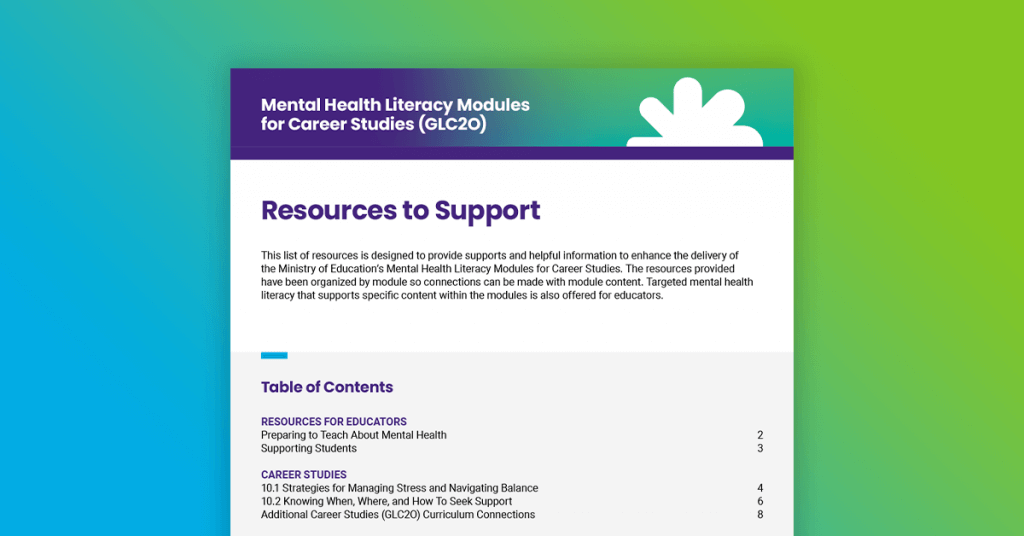
Meaningful engagement is strengthened when students and parents/caregivers can easily and comfortably participate knowledgeably in conversations about mental health. Providing accessible mental health literacy resources, such as By Your Side, Walking Together and Student MH LIT, helps create a shared foundation of understanding. This “levels the room,” supporting more confident and informed participation and enabling students and caregivers to contribute insights that reflect their lived experiences and cultural knowledge.
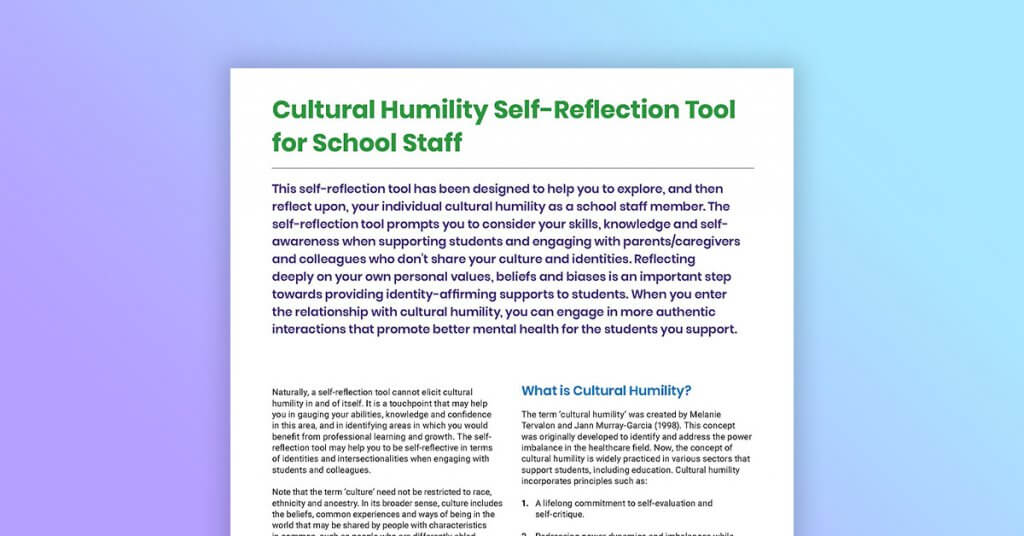
Engagement and collaboration are grounded in cultural humility — an ongoing commitment to self-reflection, learning, and awareness of personal biases, identities, and experiences of power and privilege. Cultural humility includes recognizing the limits of one’s own knowledge and remaining open to learning from students, parents/caregivers, and communities. It involves examining how beliefs and values shape interactions and decisions, ensuring that engagement is respectful, responsive, and rooted in shared understanding.
What does the research say?
Recent research highlights the importance of engaging students directly in conversations about their mental health. Doing so strengthens their agency and ensures that their identities, cultures, and lived experiences are reflected in supports. The #HearNowON2024 initiative also underscores the interconnectedness of identity, culture, and mental health, reinforcing the importance of student-centred platforms.
Collaborative approaches that include parents/caregivers and communities, often shaped through community-based participatory research, have been shown to support the development of culturally grounded and identity-affirming mental health programs.
Cultural humility is essential to this process. Unlike traditional “competence” models, cultural humility emphasizes continuous reflection, awareness of power dynamics, and action to challenge systemic oppression. This perspective recognizes communities as experts in their own experiences and helps ensure that mental health supports are co-created, responsive, and effective.
Considerations and approaches
Engagement is a collective responsibility across the school system. It extends beyond the work of Mental Health Leadership Teams and involves coordinated efforts across departments, portfolios, and roles. Every staff member contributes to the relationships, trust, and culturally responsive practices that support student mental health and well-being. This includes creating opportunities for student voice, building bridges with parents/caregivers, strengthening partnerships with communities, and ensuring that engagement efforts reflect a diversity of identities, cultures, and lived experiences. When various departments within boards and established parent/caregiver, community, and student groups (such as student trustees, Indigenous Education Councils, and Parent Involvement Committees/Catholic School Councils) work together intentionally, engagement becomes more meaningful and supports identity-affirming school mental health for all students.
Some suggestions for actionable steps in this area include:
Centre students in mental health planning and programming to reflect students’ lived experiences, cultures, and identities.
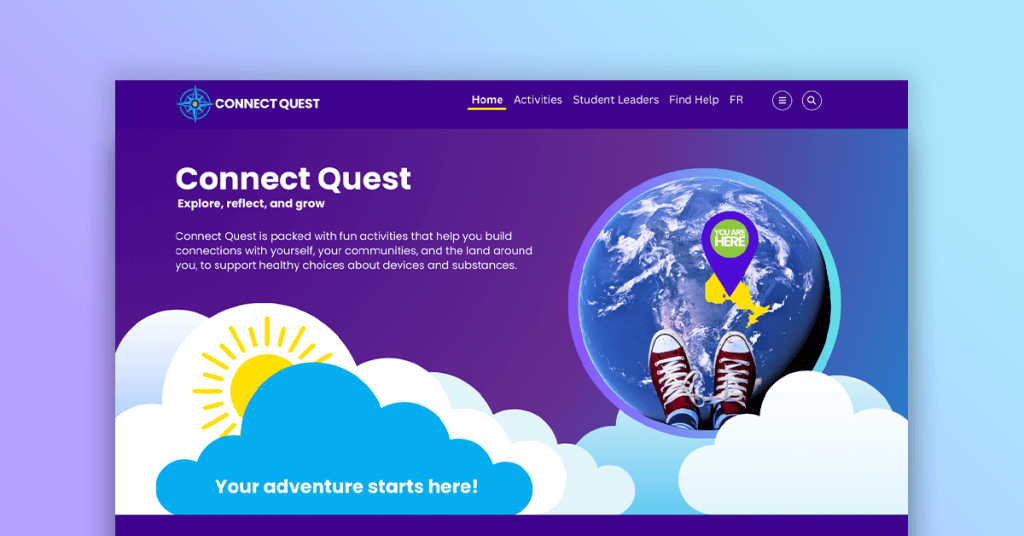
- Explore opportunities for student mental health leadership, such as student-led committees or school- and system-level mentorship programs that reflect a range of intersectional identities and perspectives (such as Connect Quest).
- Engage students in co-creating platforms to discuss identity-affirming approaches to mental health. Secondary students acting as mental health champions can help ensure supports are relevant to their peers, including younger students.
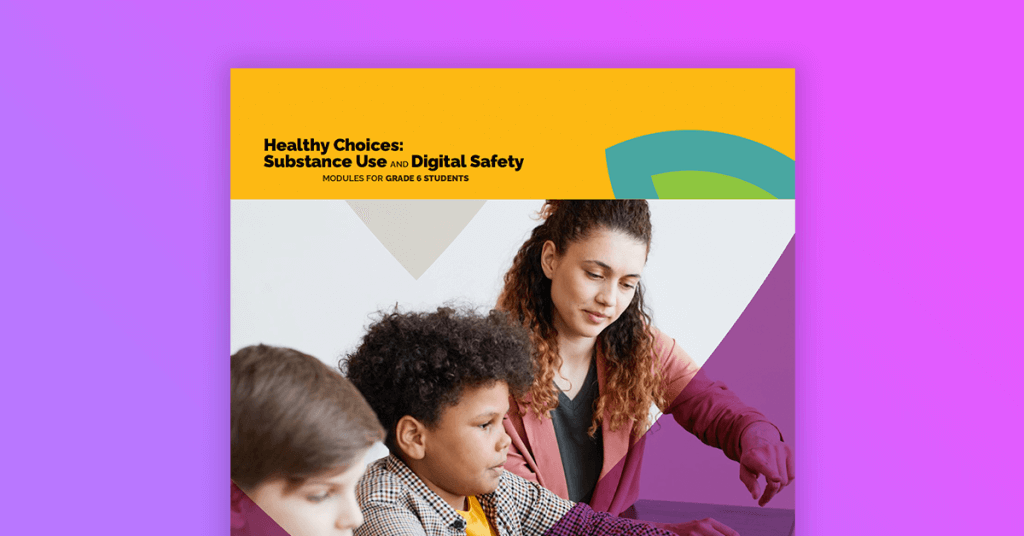
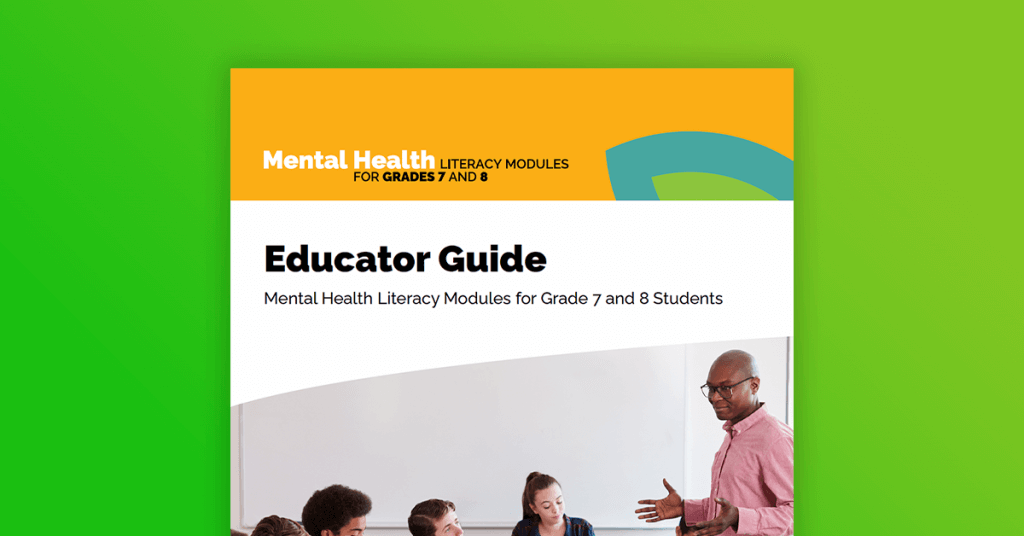
- Provide students with mental health literacy opportunities (such as Student MH LIT, ThriveSMH and Pros’ pairs blogs and posts, mental health literacy modules in grade 6, grades 7 and 8, and grade 10) to help them participate knowledgeably in conversations about mental health. Building shared understanding “levels the room” and supports more confident, informed engagement.
- Recognize that students may seek out and define “support” in different ways based on personal and community contexts.
Centre parents and caregivers in mental health planning and programming to reflect students’ lived experiences, cultures, and identities and to strengthen the circle of support around every student.
- Consider a range of engagement and communication strategies informed by parents, caregivers, and communities.
- Avoid by recognizing the strengths, insights, and lived experiences families bring, especially when decision-making spaces are shared and cultural humility is applied.
- Involve parents and caregivers as equal partners in mental health and well-being initiatives through a variety of formal and informal opportunities to contribute.
- Provide resources and services in multiple languages that are easy to understand, culturally relevant, and accessible to families.
- Offer mental health literacy opportunities for parents and caregivers (such as adapted By Your Side and Walking Together content or accessible mental health learning tools) to support knowledgeable participation and shared understanding during engagement efforts.
- Ensure engagement efforts are flexible, acknowledging that families’ willingness or ability to participate may be shaped by past experiences of exclusion, marginalization, or harm within schools or other systems.
Establish, expand, and strengthen community partnerships as they enrich identity-affirming school mental health by linking students and families to culturally grounded knowledge, practices, and supports.
- Consider setting measurable goals to increase community engagement, with particular attention to communities underrepresented in school or board-level data. Engagement may look different for historically or currently underserved groups and may require flexibility in planning and implementation.
- Partner with community organizations to co-create identity-affirming and culturally responsive programming, ensuring partnerships are mutually beneficial and reciprocal.
- Collaborate with Indigenous cultural advisors to include local Indigenous knowledge and traditions in mental health promotion and prevention efforts. This collaboration supports reciprocity and respect for cultural practices.
- Provide resources and services in multiple languages that are easy to understand, culturally relevant, and accessible to families and students.
Create feedback mechanisms that help ensure engagement remains meaningful, responsive, and reflective of student, parent/caregiver, and community needs.
- Reflect on how resources, supports, policies, and procedures are evaluated. Consider implementing ongoing feedback loops, such as standing advisory committees or regular check-in structures, that extend beyond one-time consultation points.
- Use feedback to shape practices, refine programming, and ensure that engagement efforts continue to meet the needs of students and families.
Commit to efforts that strengthen staff cultural humility in support of respectful, informed, and identity-affirming engagement.
- Create opportunities for staff to reflect on their own identities, experiences, and biases to foster a culture of humility and openness to diverse perspectives.
- Consider offering in-service training using the SMH-ON Cultural Humility Tool, including dedicated time and space for teams to learn, reflect, and apply the concepts in practice.
Resources
Amplify
“By amplifying, we refer to practices that seek to turn up the volume of voices often sidelined or silenced.” (Higgs et al., 2021)
Amplifying marginalized perspectives in school mental health is essential because many of the approaches used in schools today were shaped by Eurocentric and colonial ideas. These approaches often do not reflect the lived experiences, cultures, and strengths of many students. When certain perspectives are always centred, others are pushed to the margins, which can limit the relevance and effectiveness of mental health supports.
Intentional amplification helps shift this pattern. It creates space for the knowledge, experiences, and leadership of Black, Indigenous, and other marginalized communities to meaningfully inform school mental health practices. These communities hold rich, long-standing knowledge and expertise that promote wellness and are rooted in culture, relationship, and collective strength. When these ways of knowing inform school mental health, supports become more culturally grounded, affirming, and responsive, not only for specific groups of students, but for the entire school community.
Amplifying the leadership and expertise of cultural and community partners is a key component of this work. Care must be taken to avoid appropriation (using something from another culture than your own for your own use without permission), by co-creating authentic opportunities for practitioners to lead and share their knowledge and practices. Amplification broadens frameworks and perspectives, resulting in school mental health practice that reflects the diverse realities of students and their communities, challenging that “one size fits all.” This inclusive approach aims to enhance the relevance of supports and fosters agency, wellness, and hope for Black, Indigenous, and all students.
Understanding which student identities are most affected by mental health inequities is also a critical part of amplification. Disaggregated school and board data can help reveal patterns that may not be immediately visible. This data can help schools and systems better understand who is being well-served, who is being underserved, and where changes are needed. When this information is paired with the leadership and expertise of cultural and community partners, schools and systems are better able to redesign supports in ways that are more equitable, accessible, culturally grounded, and responsive. Together, these efforts strengthen school mental health practices and reflect the diverse strengths, needs, and realities of all students.
What does the research say?
- Current research highlights that student mental health benefits when their cultural, spiritual, and identity-based experiences are meaningfully reflected and affirmed at school. Studies indicate that students’ social and cultural identities are central to their sense of belonging at school and that feeling respected, represented, and valued is strongly associated with psychological well-being. When students experience this form of identity affirmation, it strengthens their sense of mattering and connection within the school environment — key protective factors for mental health. Long-term research shows that higher levels of school belonging are associated with lower symptoms of depression, anxiety, and stress over time, underscoring the role of identity-affirming school practices in supporting student well-being, particularly for students from historically marginalized communities.
- Taken together, this research points to the importance of examining and reframing how school mental health supports are conceptualized and delivered. By intentionally centring the perspectives and leadership of Black, Indigenous, and other historically marginalized communities, schools can broaden their understanding of what effective mental health support can look like for students today. This invites systems to make space for approaches that may be less familiar within traditional school mental health models, and to learn alongside those with lived, cultural, and community-based expertise. Rather than replacing existing western practices, this work involves weaving multiple ways of knowing and supporting well-being, drawing on strengths-based, culturally grounded, and evidence-informed approaches in responsive and flexible ways.
Considerations and approaches:
Amplifying marginalized perspectives in school mental health is collective work. It requires ongoing coordination across departments, portfolios, and roles, including Equity, Indigenous Education, Safe Schools, Curriculum, Mental Health, Human Resources, and school-level teams. Every staff member contributes to creating conditions where students feel heard, valued, and supported. The following practices help schools intentionally elevate the perspectives and experiences of Black, Indigenous, and other marginalized students in ways that strengthen identity-affirming mental health supports.
Create platforms that amplify the experiences of students with marginalized identities so mental health supports are relevant, accessible, and effective.
- Support identity-based groups and initiatives that provide space for students to express their experiences and shape school mental health solutions.
- Use principles such as Listen, Believe, Act to ensure that when marginalized students share concerns about safety, identity, or well-being, their perspectives drive next steps.
- Host student convenings where students from a diversity of identities are supported to uplift shared themes and co-create recommendations that can directly inform mental health strategies.
- Hold student forums or retreats focused on gathering and amplifying the perspectives of students from priority groups to elevate patterns that may otherwise go unnoticed.
Use and co-create resources that elevate a diversity of ways of knowing and being to help all students see themselves in mental health supports.
- Ensure learning materials and mental health resources reflect a wide range of cultures, histories, and worldviews, not only dominant narratives.
- Co-create mental health and well-being resources with marginalized communities, ensuring their knowledge and lived experience meaningfully shape supports.
- Integrate community knowledge, cultural practices, and traditions as evidence-informed sources that support student well-being.
- As part of ongoing processes, audit and evaluate existing resources for whose perspectives are centred and intentionally adjust to amplify those that have been historically minimized.
Prioritize practices that support amplification because when marginalized perspectives influence these systems, inequities decrease and students experience more responsive care.
- Explore opportunities to visit and/or welcome community leaders, cultural practitioners, or mental health professionals with lived experiences to co-lead professional development sessions or classroom discussions as part of ongoing, planful learning.
- Consistently look for ways to partner, incorporate, and celebrate the work of culturally and identity-specific responsive supports and services.
- Seek to direct sustainable funding towards establishing multiple positions specifically designed to advance reconciliation and equity and amplify underrepresented perspectives in school mental health.
- Evaluate decision-making committees/forums to see if they reflect the diversity of the community served and create pathways for marginalized community members to contribute to and take on leadership roles in these committees/forums if they are not representative of the community.
- Encourage Indigenous education training for educators so they have the knowledge, skills, and tools to weave Indigenous wellness knowledge into lessons, regardless of subject area. See appropriation vs. appreciation for further guidance.
Resources
Respond
By respond, we refer to intentionally providing mental health supports that reflect students’ identities, realities, and expressed needs.
For students to strengthen their ability to care for their mental health, they need access to school mental health resources across the multi-tiered system of support that are affirming, accessible, responsive, differentiated, and reflective of their realities. School mental health protocols and approaches are mostly developed and tested from white, European perspectives. This reinforces a “one pathway” approach, which does not meet the needs of every student, and goes against ethical practice that calls for differentiated and anti-oppressive approaches.
Students need mental health supports that are created with and informed by their lived experiences and their intersectional and developing identities — because who you are affects how you feel. When identities are affirmed, reflected, and celebrated, and there is a sense of hope, purpose, belonging, and meaning, students are more likely to feel a strong sense of positive mental health, well-being, and connection. Identity-affirming and differentiated approaches to school mental health are responsive to students through their relevance, accessibility, and effectiveness, ultimately promoting better outcomes for every student.
- Differentiated approaches to school mental health adapt support and services to every student’s unique needs, strengths, circumstances, preferences, and experiences while validating and respecting their identities and background. Differentiation reinforces that one size does not fit all.
- Identity-affirming mental health support centres an individual’s sense of self and identity and considers the impact of identities on mental health and well-being. This involves building positive connections by acknowledging, validating, and respecting each student’s unique identity, including but not limited to their race, ethnicity, gender, sexual orientation, cultural background, socioeconomic status, faith, and abilities. It also incorporates and prioritizes cultural knowledge and ways of being and doing that are responsive to every student, and is an ethical standard of regulated school mental health practice.
What does the research say?
- For children and youth with marginalized identities, access to mental health care can be an issue, and schools provide an important avenue for accessing such care, though the potential of schools remains largely untapped. To meet their potential, as a first step, school mental health services need to provide services across tiers that are responsive to the diverse identities of the students and their families and communities.
- Many existing programs and mental health education and training have been developed from predominantly western, Eurocentric frameworks, which often fail to address the unique needs of marginalized students. To effectively support students’ mental health, schools must provide services that are not only affirming of their identities and culturally responsive but also reflective of the realities of the students they serve.
- This may mean delivering existing programming in culturally sensitive ways (such as when applying the BRISC protocol — already a strength-based resource, clinicians hold space for students to describe the areas they wish to address in the fullness of their context, drawing on culture and community aspects). It may also mean adapting programming for students to include culturally responsive elements (such as inviting students to deepen and personalize strategies using cultural practices that they find helpful, or developing and using identity-specific programming, such as STRONG to support newcomer students, Bridges to support 2SLGBTQIA+ students, or Let’s Talk the Talk to support students who identify as Black).
Considerations and approaches:
Responding to student mental health needs requires intentional, identity-affirming, and differentiated care across the multi-tiered system of support. Because students’ identities, cultures, and lived experiences shape how mental health concerns are expressed, understood, and supported, response pathways must move beyond “one-way” models rooted in dominant worldviews.
Effective school mental health adapts supports to each student’s unique contexts, thereby validating who they are and honouring their intersecting identities. Meaningful, sustainable support benefits from collaboration across departments, such as student services, Indigenous education, equity and inclusion, special education, academic leadership, and community partnership teams, so that mental health practices are aligned, reinforced, and embedded throughout the entire educational environment. When responses are culturally responsive, accessible, collaborative, and reflective of students’ realities, they build connection, safety, and trust, creating conditions where every student can access timely, meaningful care.
Some suggestions for actionable steps in this area include:
Promote student-centred approaches to strengthen mental health response systems. When students shape how supports look, sound, and feel, services become more relevant, accessible, and effective.
- Co-design mental health promotion initiatives and supports that centre student perspectives, ensuring they have a meaningful role in shaping resources that reflect their needs and experiences.
- Explore opportunities for students to lead/co-lead and participate in mental health initiatives at school, within the community, and at the board level, encouraging agency over their well-being.
- Within the therapeutic setting, engage in student-led processes to help young people identify and build on their strengths and strategies.
Integrate identity-affirming/culturally responsive approaches in mental health promotion.
- Collaborate on school-wide campaigns to raise awareness about mental health, substance use health, and stigma reduction, focusing on the importance of identity-affirming approaches.
- Partner with those with expertise to co-develop a learning series for staff to support culturally responsive classrooms and mental health promotion practices.
- Encourage staff to reflect on their own identities and biases and consider how these may shape the supports and approaches they offer to students in the area of wellness promotion, social-emotional skill development, stigma reduction, and mental health literacy.
- When introducing learning related to substance use health and addictions prevention, consider carefully the lived experiences of students in the classroom, appreciating the burdens that some students carry due to intergenerational and community trauma and/or stigma related to substance use.
- Encourage staff to reflect on the use of wellness activities, resources, and approaches to ensure an anti-oppressive, anti-racist, and identity-affirming environment.
- Recognize and address mental health within the context of students’ overall well-being, including their social, emotional, and cultural needs.
- Explore, through collaboration with Indigenous, equity, and curriculum departments, providing schools with a culturally responsive practices toolkit to cultivate relevant wellness strategies for the classroom.
- Offer training in restorative and trauma-sensitive practices to align with equity-centred education and focus on building community in classrooms.
- Work with students to inform and improve identity-affirming wellness promotion approaches in the classroom.
- Consider professional development sessions on identity-affirming mental health promotion practices for new educators.
Integrate identity-affirming/culturally responsive practices into prevention and early intervention services delivered by school mental health professionals (Tier 2/3).
Design accessible and responsive Tier 2/3 supports:
- Provide and support ongoing evidence-informed professional development on identity-affirming practices for mental health professionals that can be woven into prevention and early intervention services (See the calendar of professional learning opportunities offered by SMH-ON).
- Review and adapt service delivery modules and procedures for tier two/three support to ensure they are accessible and responsive for every student, especially those from marginalized communities. Consider barriers (such as language, ability and stigma, such as age of consent to access mental health services at school).
- Provide resources and services in multiple languages that are easy to understand, culturally relevant, and accessible to families and students.
- Build, strengthen, and sustain reciprocal community partnerships, recognizing that some students may prefer to access mental health supports outside the school. Schools play an important role in facilitating respectful, barrier-free pathways to culturally grounded, community-led, or identity-specific services when these are students’ supports of choice.
Strengthen workforce capacity and conditions.
- Intentionally plan for hiring, supporting, and retaining a diversity of identity-specific mental health professionals at all levels.
- Acknowledge the unique challenges faced by mental health professionals with marginalized identities and ensure managers are equipped to offer support and have an avenue to seek similar support themselves.
- Special consideration should be taken to support the unique needs of staff doing identity-specific work (such as specialized graduation coaches or GSA facilitators/advisors) that may share aspects of their identity with the students they are working with.
Align protocols, data, and decision-making with identity-affirming practice.
- Revisit and update life promotion and suicide prevention protocols to ensure they are aligned with identity-affirming, anti-racist, and culturally responsive practices (for example, review crisis support policies and procedures to critically consider when to involve the police versus mental health crisis workers, given well-documented instances of harm towards racialized people during mental health crises).
- Consider and carefully examine identity-based data to determine student groups who experience disproportionate risks and harms (such as Inuit and 2S/LGBTQIA+ youth, who face some of the highest suicide rates in Canada). Respond with strength-based and co-created protocols that reflect the cultural contexts and realities of these communities.
- Use student voice data to reduce barriers to mental health supports and services.
- Explore opportunities to discuss the IA-SMH Frame during clinical supervision, when setting department goals, and during monitoring and evaluation planning at all levels of the system.
Monitor outcomes and celebrate successes.
- Regularly reflect on the effectiveness of mental health programs through surveys, feedback sessions, observations, and data analysis to ensure they meet the needs of every student.
- Be open to adapting, refining, or rethinking programs in response to feedback from students and community stakeholders. If existing programming is no longer meeting the needs of students served, abandoning these efforts and transitioning to more responsive supports is necessary. This can be challenging when staff are comfortable with current practice, so having a process that includes clear communication and rationale for the change, with coaching support for transitioning to a new protocol, is required. Consider tracking mental health outcomes for students and celebrate the successes of identity-affirming initiatives to reinforce their importance and effectiveness. Not only does this measure impact, but it also works towards developing an evidence base for new and emerging initiatives.
- Share success stories and best practices with the broader community to inspire further commitment to identity-affirming mental health care and to sustain initiatives, policies, practices, and funding.