
Mental health in the classroom – what is the role of an educator?
As educators, we know that our role is to teach curriculum and provide opportunities for students to learn, explore and be curious-but what about mental health? What is the role of educators?
Start with connection and relationship, mental health will follow.
~ Advice to educators from Lillian, Ontario grade 12 student and member of ThriveSMH
What is mental health?
Let’s start by considering what mental health really means – it may not be what you think! Mental health is the state of an individual’s psychological and emotional well-being. It’s a necessary resource for living a healthy life and a main factor in overall health. It does not mean the same thing as mental illness. Good mental health allows us to feel, think and act in ways that help us enjoy life and cope with its challenges. Given this, what does mental health at school look like? Mental health at school can involve both identity-affirming mental health promotion and literacy.
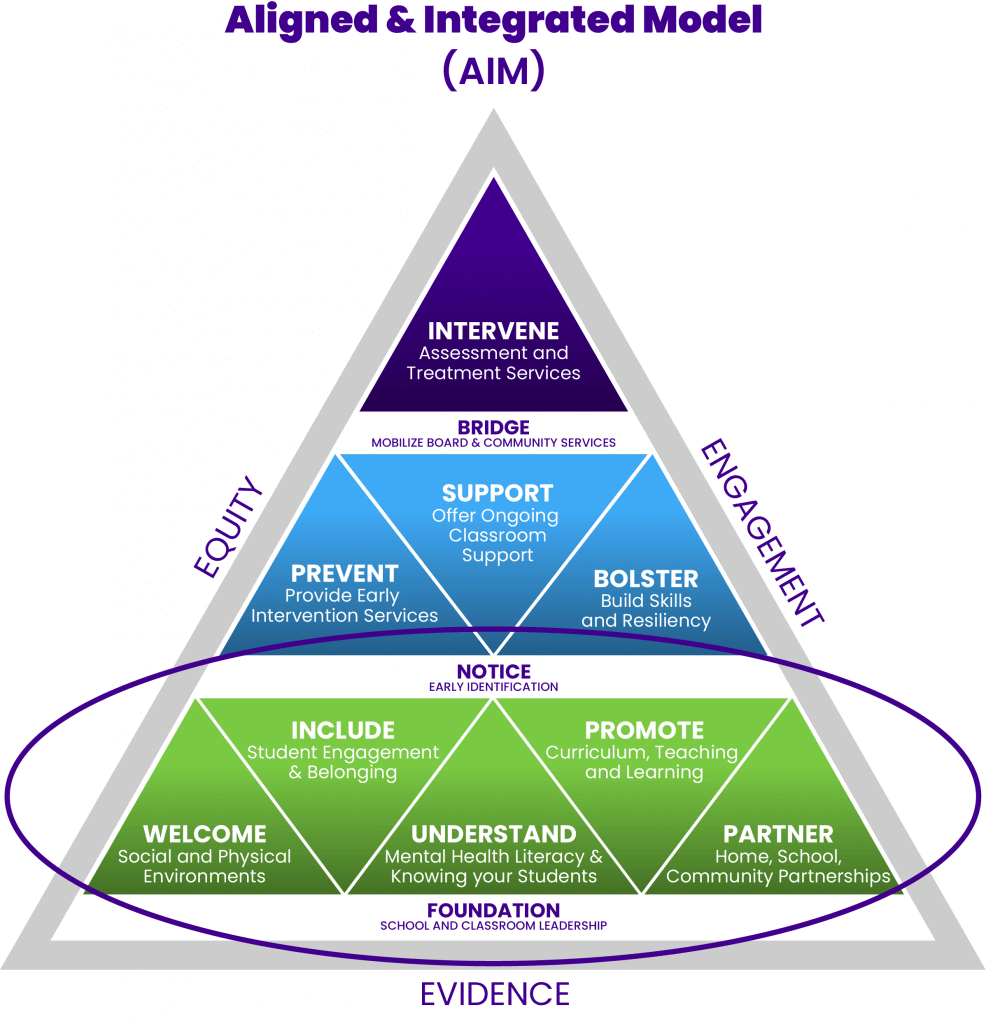
Mental health promotion is the foundational everyday work that educators and school staff do within and beyond the curriculum to welcome and include students, to understand them, to build knowledge of mental health, to promote mentally healthy habits and to partner with families, students and other staff to create a supportive environment (PPM 169).
Mental health literacy includes the knowledge, understanding, skills, and confidence that help us care for our mental health, support others, and know how to seek help, when it’s needed.
Why does mental health at school matter?
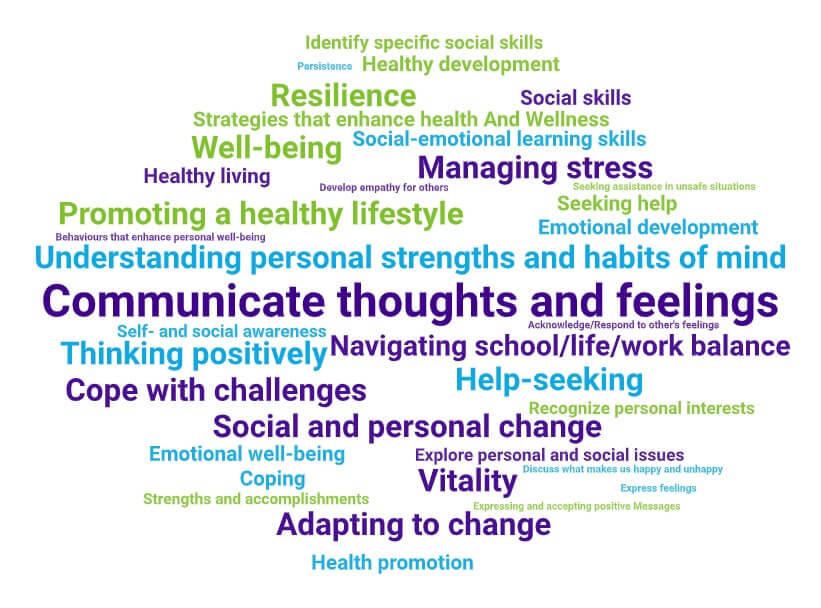
These words and phrases have been taken directly from Kindergarten to grade 12 curriculum expectations (across a wide variety of courses) as examples of mental health learning happening in Ontario classrooms.
Mental health promotion and literacy that affirms, reflects and celebrates the identity of every student supports students to be well so they can fully engage in school and in life.
There are connections to mental health throughout curriculum from Kindergarten to grade 12. These connections might be new to you, but this teaching isn’t. Educators have been teaching about mental health for years, and they are well positioned to do so.
Learning about mental health is necessary and helpful for students because mental health learning supports ALL learning. It helps students feel prepared to learn, supports a sense of belonging at school, and can improve academic performance, too (PPM 169). Students also tell us that they want this type of learning at school (#HearNowON 2021). It’s relevant for all because we ALL have mental health, and it impacts us no matter our age, grade, community, culture or career path.
How can we teach about mental health at school?
The good news is that you are likely already supporting student mental health in many ways every day through modeling and caring actions, like providing a warm welcome and opportunities for student leadership and voice. Explicitly teaching developmentally appropriate mental health information, skills, and strategies is also important.
School Mental Health Ontario offers many identity-affirming, evidence-informed, grade-specific resources to help make this type of mental health learning part of students’ ongoing school experience. Wayfinder (a sequenced, grade-specific guide to teach about mental health) is a great place to start! The ongoing relationships you can build with students matter, too. They help students feel seen, supported, and able to participate fully in the learning. Start with connection and relationship, and mental health will follow!
We all have mental health, which means mental health learning can be helpful for all of us. To grow your own mental health literacy, check out MH LIT — Mental Health in Action mental health literacy course for educators.
For more context on student mental health in Ontario, see PPM 169 | Education in Ontario: policy and program direction.